

Do Corporate Gifts Actually Influence Customer Loyalty?
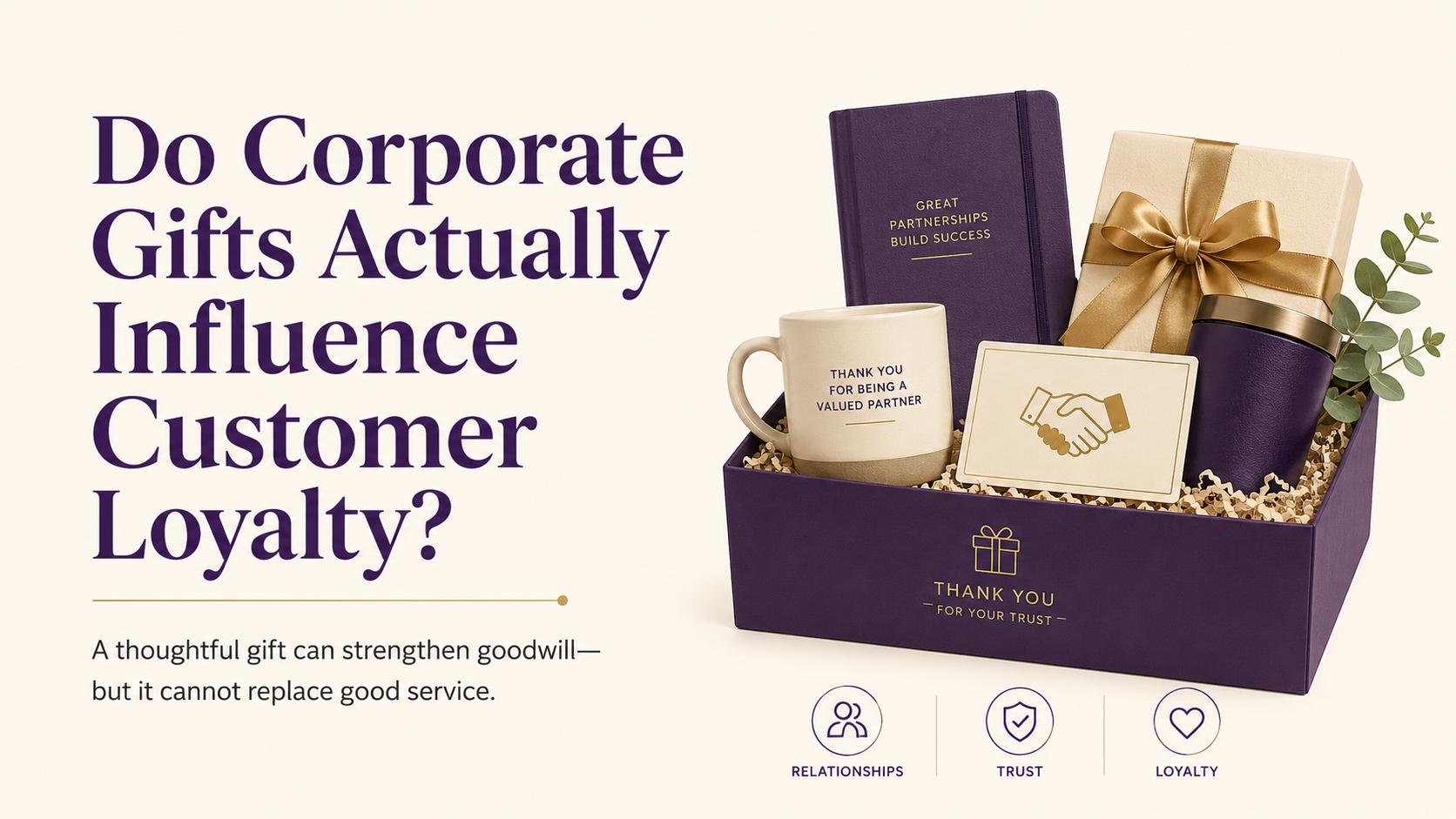
Every December, Nigerian offices receive hampers, calendars, notebooks, drinks and enough branded mugs to open a small kitchenware shop.
But do these gifts actually make customers more loyal—or do they simply create a pleasant moment before business continues as usual?
The evidence suggests that a well-chosen gift can strengthen goodwill, gratitude and loyalty. However, it cannot repair poor service, unfair pricing or months of missed deadlines.
A hamper may remind a client that you value the relationship. It should never be expected to make them ignore a bad one.
Can a gift influence a renewal decision?
Yes—but it is more likely to act as a relationship enhancer or tiebreaker than the main reason a client renews.
A 2026 study by Springer involving two field experiments and five laboratory experiments found that unconditional customer gifts increased gratitude, loyalty and spending. Interestingly, increasing the value of the gift produced only a limited additional benefit, suggesting that businesses do not always need to overspend to create an effect.
However, this research was not conducted specifically among Nigerian business customers, and much of it focused on consumer transactions rather than complex corporate contracts.
In business-to-business relationships, a client is still likely to prioritise:
Quality of service
Reliability
Pricing
Communication
Problem-solving
Delivery against agreed targets
A gift may reinforce a positive relationship. It is unlikely to rescue a supplier that regularly disappoints the client.
The better question is therefore not:
“Will this hamper make them renew?”
It is:
“Will this gift strengthen the positive impression our work has already created?”
Gratitude creates loyalty; pressure creates suspicion
A corporate gift works best when it feels like genuine appreciation rather than a disguised transaction.
Springer Research published in the Journal of Business Ethics found that customer inducements and special treatment were more positively received when customers already believed the company was ethical.
That distinction matters.
A gift saying:
“Thank you for working with us for five years.”
feels different from one saying:
“Your contract-renewal meeting is tomorrow. Please accept this expensive watch.”
The first recognises a relationship. The second may appear to be purchasing influence.
The most effective gift creates gratitude without making the recipient feel indebted or uncomfortable.
The best time to send a client gift
December is the obvious corporate-gifting season in Nigeria, but it is also the busiest. A client may receive ten nearly identical hampers in one week and remember none of the senders by January.
A gift can be more memorable when connected to a specific moment:
Timing | What the gift communicates |
Successful project completion | “We appreciate what we achieved together.” |
Client or company anniversary | “We remember your journey.” |
New office or business expansion | “We are celebrating your growth.” |
Major professional milestone | “We recognise your achievement.” |
After a valuable referral | “Thank you for trusting us enough to recommend us.” |
Mid-year appreciation | “We value the relationship beyond festive tradition.” |
Christmas or Eid | “We are thinking of you during an important season.” |
Timing becomes sensitive when a tender, procurement exercise, contract award or renewal decision is active.
As a practical ethical rule, avoid sending personal gifts immediately before someone makes a decision affecting your company. Resolve poor service with corrective action, refunds or proper compensation—not with a gift designed to distract from the problem.
What is an appropriate client-gift budget?
There is no single correct naira amount.
The right budget depends on the client’s policies, the length and value of the relationship, the occasion, the recipient’s role and whether the gift is for one individual or an entire team.
A good corporate gift should be:
Proportionate: It should not be so expensive that the recipient feels influenced or obligated.
Repeatable: The company should be able to maintain the gifting standard without creating unreasonable expectations.
Policy-compliant: The recipient’s organisation may set a maximum value, require declaration or prohibit gifts entirely.
Defensible: The sender should be comfortable recording the gift, its value, the recipient and its business purpose.
A useful budget test is:
Would this gift still look appropriate if its value, recipient and timing appeared in an internal audit report?
When the answer is no, the gift is probably too risky.
Expensive individual gifts can also create unfairness. A quality hamper shared by the client’s team may be more appropriate than a luxury item presented privately to one decision-maker.
Personalisation matters more than adding another logo
Corporate personalisation should not mean covering every available surface with the sender’s branding.
A client already knows which company sent the gift. They do not necessarily need the company logo on the flask, bag, notebook, umbrella, power bank and biscuits.
Better personalisation reflects something about the recipient:
Their name or company milestone
Their industry or professional interests
Their city or cultural background
The size and composition of their team
Dietary preferences
The nature of the business relationship
A specific achievement during the year
A personalised message from a founder, account manager or senior executive can be more memorable than an additional branded item.
Compare:
“Season’s greetings from ABC Limited.”
with:
“Thank you for trusting our team during your expansion into Abuja. We appreciated the openness and speed of your team throughout the project.”
The second message proves that the gift is connected to a real relationship.
What client gifts are most likely to be remembered?
The strongest client gifts usually combine usefulness, relevance and good presentation.
Examples include:
A quality hamper selected for the recipient or office team
A Nigerian-made artwork or locally crafted item
A personalised executive accessory
A useful technology or work accessory
A book connected to the recipient’s profession or interests
An experience suitable for the team
A donation to a credible cause aligned with the client’s values
A thoughtful milestone gift accompanied by a specific message
Food hampers remain useful because they can be shared. However, they become forgettable when every company sends the same combination of generic products.
A memorable hamper might reflect the client’s location, team size or festive traditions. It should also avoid products the recipient cannot use because of dietary, religious or organisational restrictions.
Corporate gifts have ethical limits
Client gifting becomes risky when it is secretive, excessively expensive, directed at a decision-maker during an active procurement process or offered in expectation of special treatment.
The Nigerian Constitution’s Code of Conduct for Public Officers states that a public officer must not accept property or benefits connected to the discharge of official duties. It also says that gifts from firms or people with government contracts are presumed to violate the rule unless the contrary is proved.
This means businesses should be especially careful when gifting public officials, government agencies and people involved in public procurement.
Private companies may also have strict internal rules. MTN Nigeria, for example, states that its Gifts, Hospitality and Entertainment Policy is intended to prevent actual or perceived conflicts of interest and ensure that third parties are not influenced through gifts.
Before sending a corporate gift, ask:
Does the recipient’s company permit gifts?
Is there a maximum value?
Must the gift be declared?
Can the person accept it personally, or should it go to the organisation?
Is a tender, renewal or contract decision currently active?
Could the gift be interpreted as an inducement?
Cash, personal bank transfers, money bouquets and cash-equivalent vouchers require particular caution in corporate relationships. Even when well-intended, they may resemble a personal payment rather than business appreciation.
When uncertain, send a modest team gift, request written approval or choose a charitable donation made transparently in the company’s name.
So, do corporate gifts create loyalty?
They can help—but only when the fundamentals are already in place.
A thoughtful gift can make a reliable supplier feel warmer, more human and easier to remember. It may strengthen goodwill, encourage referrals and reinforce an established partnership.
But a gift should not be treated as a replacement for excellent service or as a shortcut around a client’s decision-making process.
The best corporate gift says:
“We appreciate the relationship.”
It should never appear to say:
“Now you owe us the renewal.”
That is the difference between client appreciation and corporate influence—and it is where a responsible gifting strategy begins.
Comments
Be the first to comment.
Leave a comment